
During the current heatwave I’ve been drifting outside my habitual South West England lane into East Anglia. For additional background information please see also the June 26th section of “The June Heatwave in West Devon” article, wherein I surmised that:
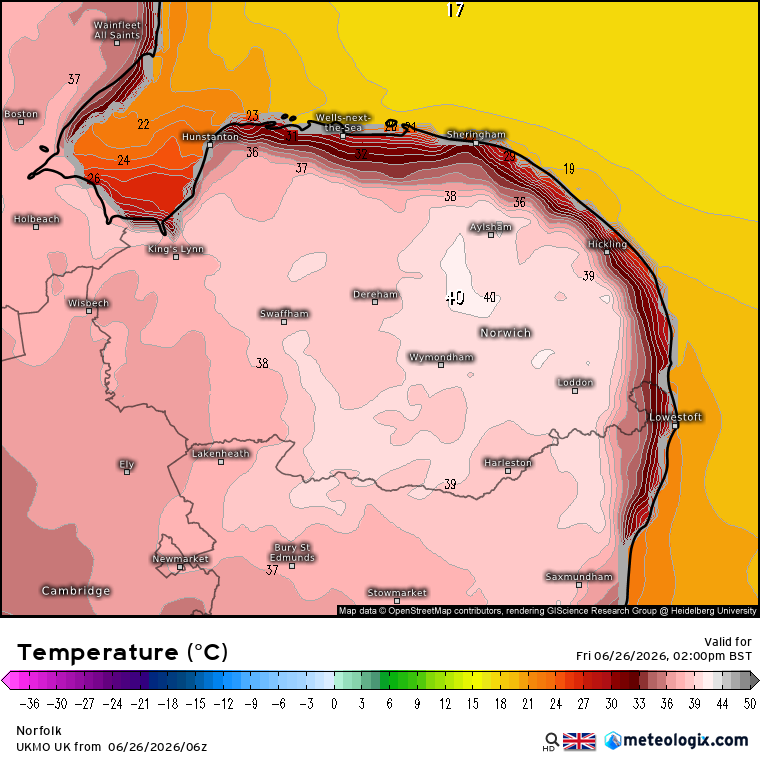
The 06Z UKV run suggests that the pan UK record for June may well be broken in East Anglia later today:
Somewhat later in the day I further surmised on the “Summer 2026 max temp heat watch” thread on the Netweather forum that:
Based on the current UKV I’ll plump for Norwich
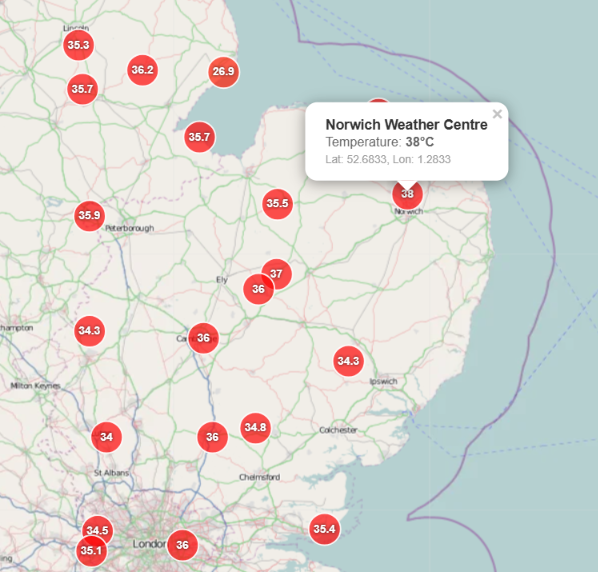
Can you imagine my joy when I subsequently recorded the following image from the Netweather “Live Weather Stations” map?
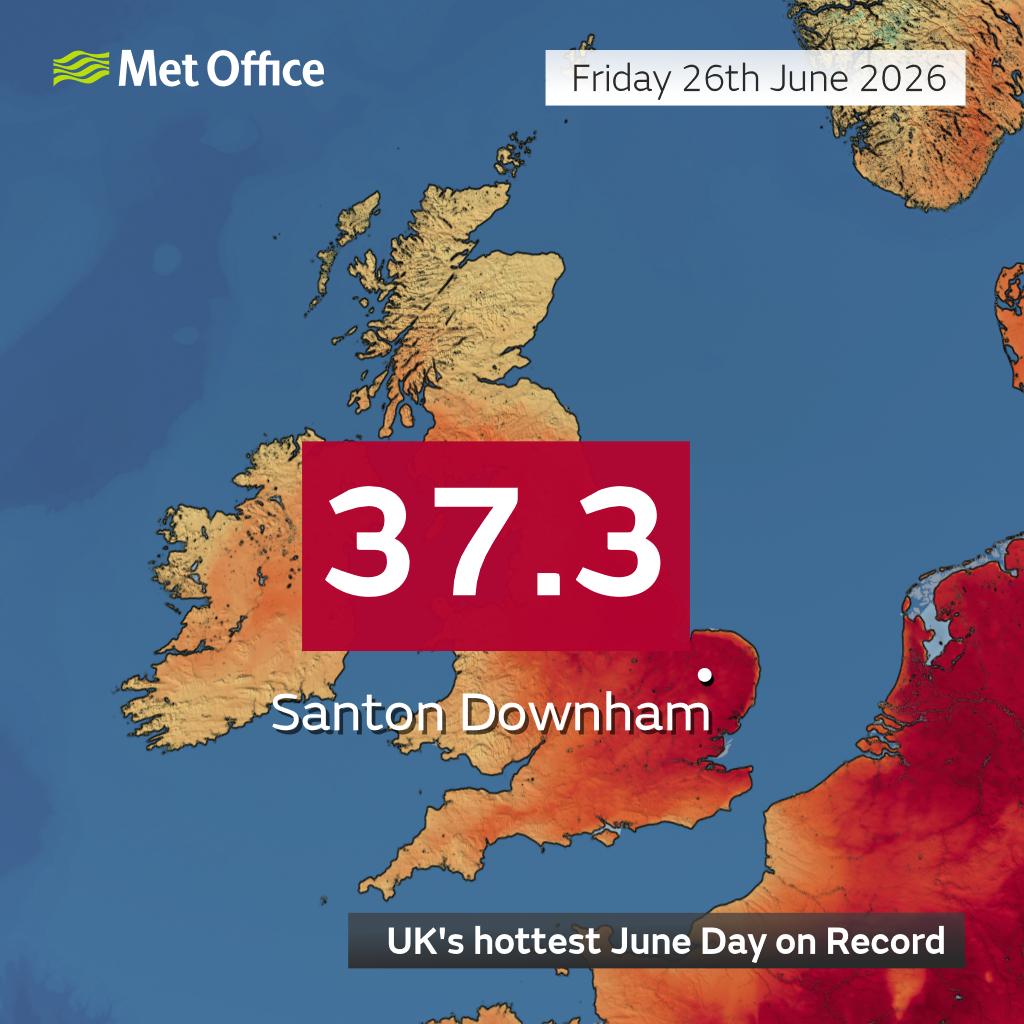
Can you also imagine my surprise when the Met Office then published the following image on their X/Twitter and other assorted (anti)social media channels?
When the Met Office later published this press release my astonishment knew no bounds! Amongst other things it stated that:
The UK has provisionally seen a new maximum temperature record for June for the third consecutive day, with 37.3°C reached at Santon Downham in Suffolk on 26 June.
This exceeds the figures reported on 24 and 25 June and, if confirmed via the verification process, would become the new daily maximum air temperature record for the month of June.
Doing my due diligence following this unanticipated turn of events, I discovered that Norwich Airport isn’t on the Met Office list of “official” weather stations. However not too far away can be found the “Mildenhall No. 2” weather station, which is currently green flagged as being officially approved:
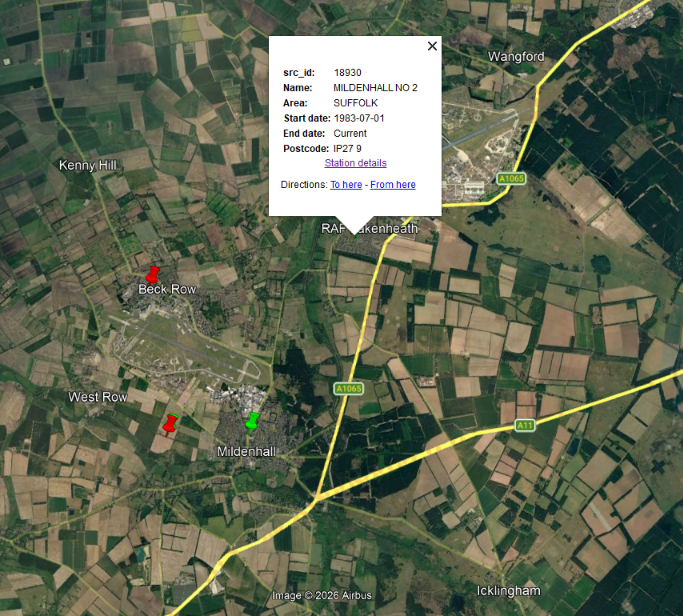
Clicking the “Station details” link reveals the following information:

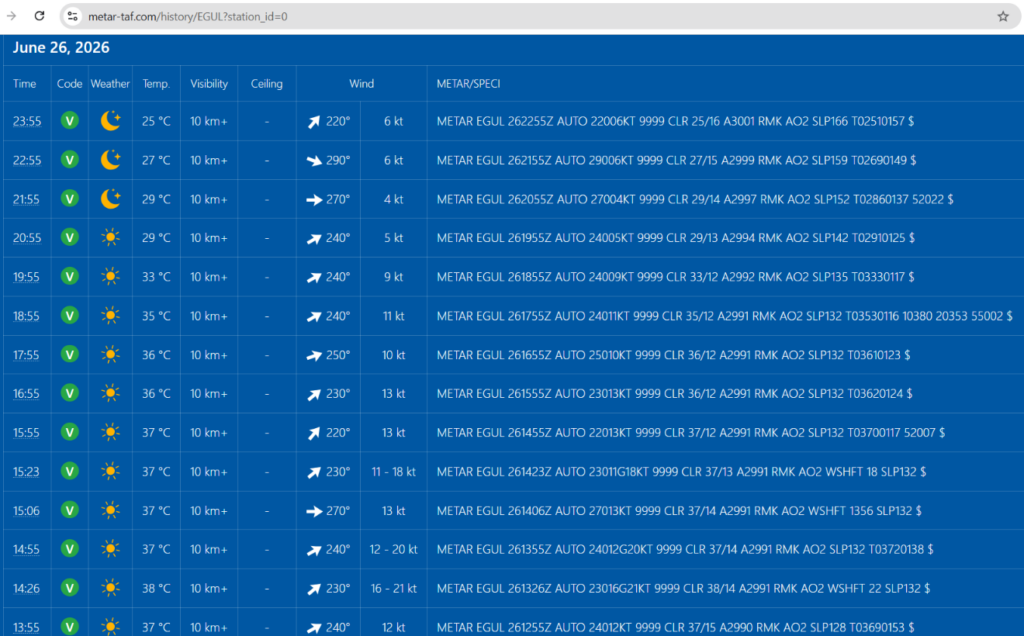
Curiously the “Mildenhall No. 2” weather station appears to be located near RAF Lakenheath on the Met Office’s map, whereas assorted METAR reporting web sites reckon “EGUN” refers to RAF Mildenhall:
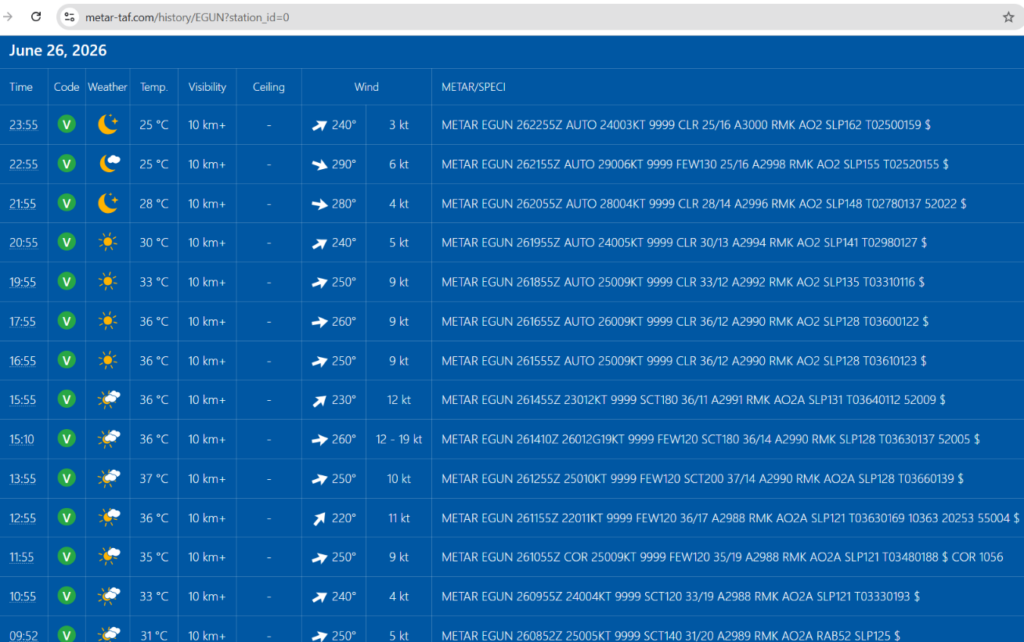
The weather station at RAF Lakenheath is instead known by the “EGUL” moniker:
Now there may well be a perfectly rational explanation for all of the above, but bear with me and go back one more day to the 25th of June, when I reported that:
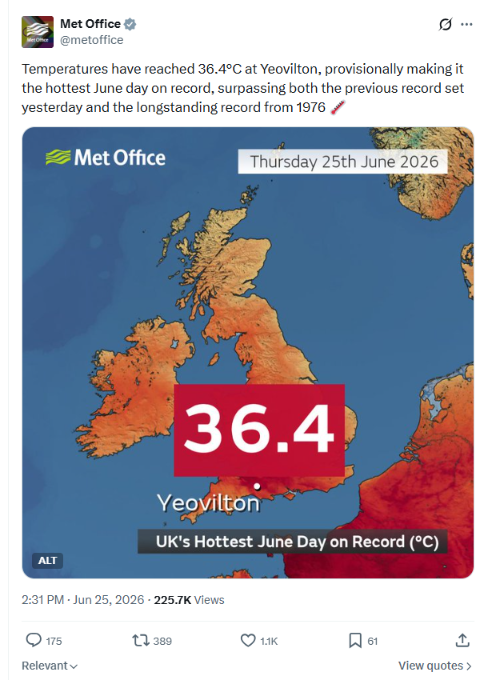
The pan UK June and all time SW England maximum temperature records have duly (if provisionally!) fallen at Yeovilton in Somerset.
I was not in the least surprised to discover that the Met Office agreed with me, albeit whilst leaving out the part about the “all time SW England maximum temperature record”:
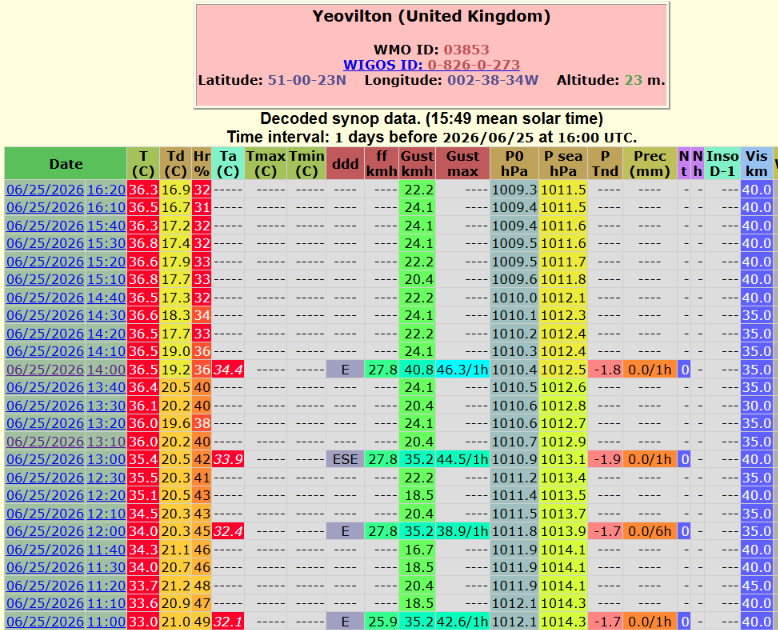
Later in the day I checked the SYNOP data from Yeovilton once again, and added that:
The maximum temperature at Yeovilton subsequently reached at least 36.8 °C
You could knock me down with a proverbial fevver when the Met Office reported thusly instead:
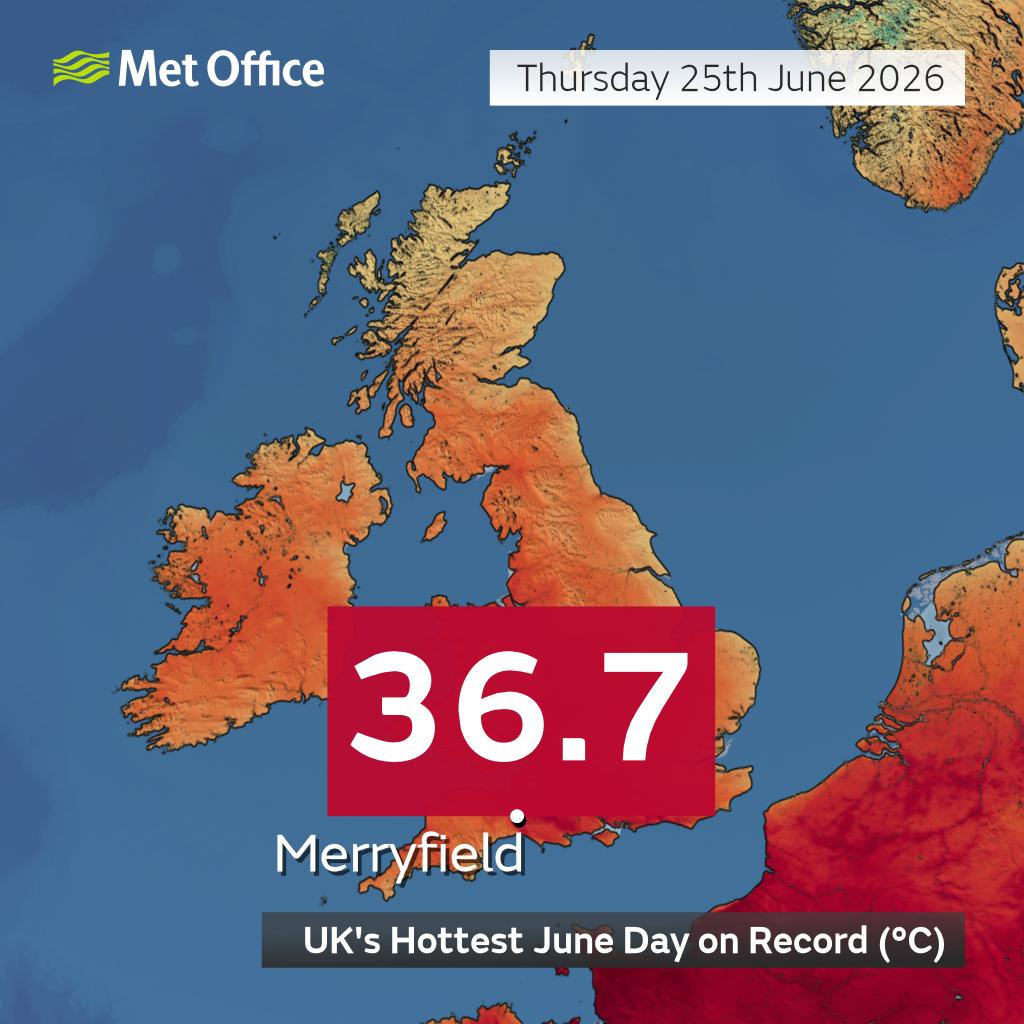
I’d be extremely grateful if you could provide me with a logical explanation for the apparent fact that 36.7°C at Merrifield is hotter than 36.8 °C just up the road at Yeovilton, since the Met Office Press Office has singularly failed to do so as yet.
[Update – June 29th]Evidently the Met Office has been listening to me! Here’s their latest (anti)social media infographic on the controversial topic of the “Hottest UK June day evah!”:
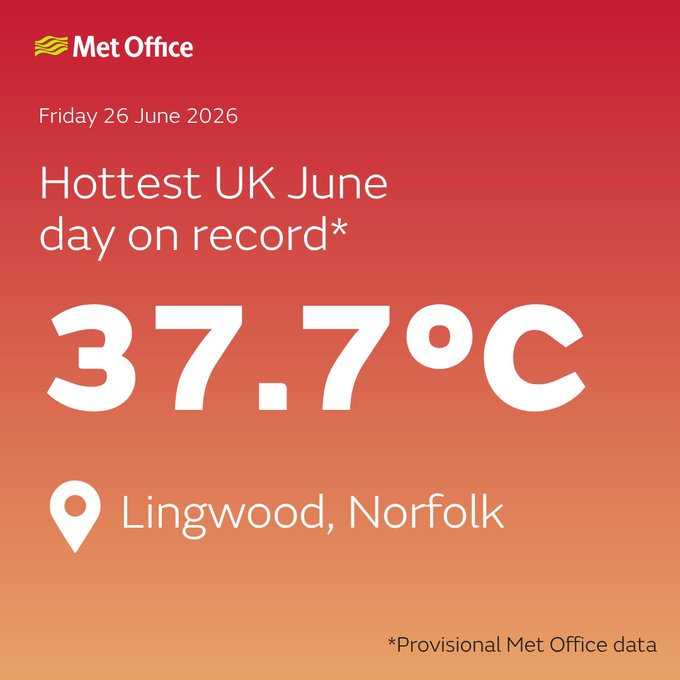
Lingwood is a manual weather station east of Norwich. I assume the “verification processes” thus far have included checking such manual stations. Removing the “provisional” label takes longer?
[Update – July 1st]The Met Office has issued a press release which begins as follows:
Provisional Met Office statistics show that June 2026 was England’s warmest June on record for average mean temperature, while the UK and Wales recorded their second warmest June in a series dating back to 1884.
A defining feature of the month’s heatwave was the exceptionally warm overnight temperatures, with frequent ‘tropical nights’ helping to drive the highest average June minimum temperatures on record for the UK, England and Wales. Scotland recorded its joint highest on record.
Provisional mean temperature statistics highlight the exceptional nature of the month. England recorded its warmest June on record, with a mean temperature of 17.1°C, surpassing the previous record set in 2025 and standing nearly 3°C above the long-term average.
For the UK, June 2026 provisionally ranks as the second warmest June on record, behind only June 2023. Wales recorded its second warmest, while Scotland and Northern Ireland both saw their joint fourth warmest June since 1884.
Met Office Scientist Dr Emily Carlisle said: “June’s high temperatures are part of a broader pattern of warmth during 2026. So far, five of the first six months of the year have recorded mean temperatures at least 1°C above average, with only January seeing below-average temperatures.”
Spring this year was the warmest on record for England and Wales, and the third warmest for the UK, due in part to an exceptionally early and record-breaking heatwave at the end of May.
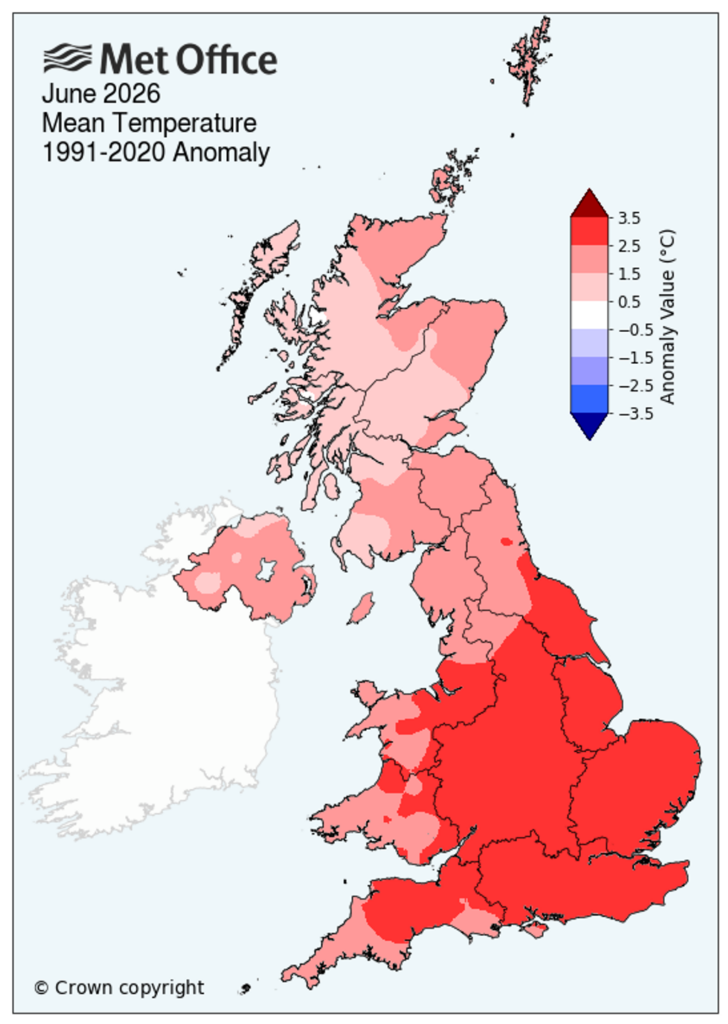
Moving on to the recent heatwave, the press release continues:
The second half of June is likely to be remembered for the exceptionally hot and humid heatwave that delivered record-breaking June temperatures and unprecedented overnight warmth in many areas. This was the first time since extreme heat warnings were introduced to the weather warnings system in 2021, that a Red Warning for Extreme Heat was issued for three consecutive days in the UK, with the extent and persistence of the heat particularly notable. Records dating back several decades, in some cases over a century, were challenged or exceeded during this event.
Alongside the high daytime temperatures, the heatwave was notable for exceptionally warm nights. The UK, England and Wales all recorded their highest average minimum temperature for June since records began in 1884, each surpassing the previous record by around 0.5°C. Scotland also recorded its joint highest June average minimum temperature on record.
June 2026’s minimum temperature was more than 2°C above average across the UK, while England recorded overnight temperatures 2.6°C above average.Northern Ireland saw its second highest minimum temperature since 1884.
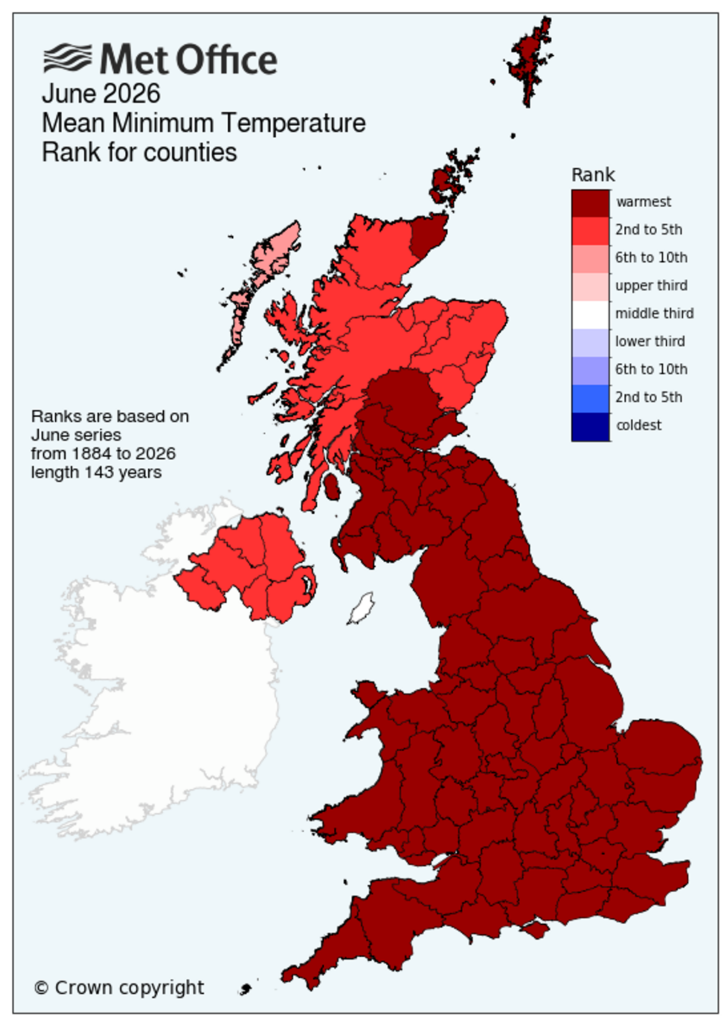
Yesterday the Met Office also published a blog post about the recent temperature records:
June 2026 will be remembered as a period which included notable heat across parts of the UK, with a number of long-standing temperature records either provisionally broken or equalled.
Prolonged hot conditions, combined with high humidity, led to both exceptionally high daytime temperatures and unusually warm nights. New UK temperature records for June stole the headlines, but hundreds of individual weather stations also broke their own June temperature records.
Over 150 weather stations set their own highest maximum temperature record for June, with a similar amount also setting records for their highest minimum temperature the month, including a number of sites with over 100 years of records.
The below national records are provisional, pending a verification process which will take place in the coming weeks.
England saw the most significant new national record for June daily maximum temperature. A provisional high of 37.7°C was recorded at Lingwood, Strumpshaw Hill on 26 June, surpassing the previous record of 35.6°C set at Southampton in June 1976.
Wales also experienced exceptional heat, with 35.9°C recorded at Cardiff Bute Park on 25 June, breaking the previous June record of 33.7°C set in 2000.
In Northern Ireland, the June record was equalled rather than broken, with 30.8°C recorded at Castlederg on 25 June, matching the long-standing value set in 1976 at Knockarevan.
Scotland, meanwhile, retained its previous June maximum temperature record, with no new record set during this heatwave.
These temperatures highlight how intense the late June heat became, particularly across England and Wales, with values well into the mid-30s Celsius during the peak of the event.
The article makes no mention of the new all time record temperature for South West England, reached on June 25th.
To be continued…
