
The latest Environment Agency report on “Dry weather and drought in England” includes this ominous announcement:
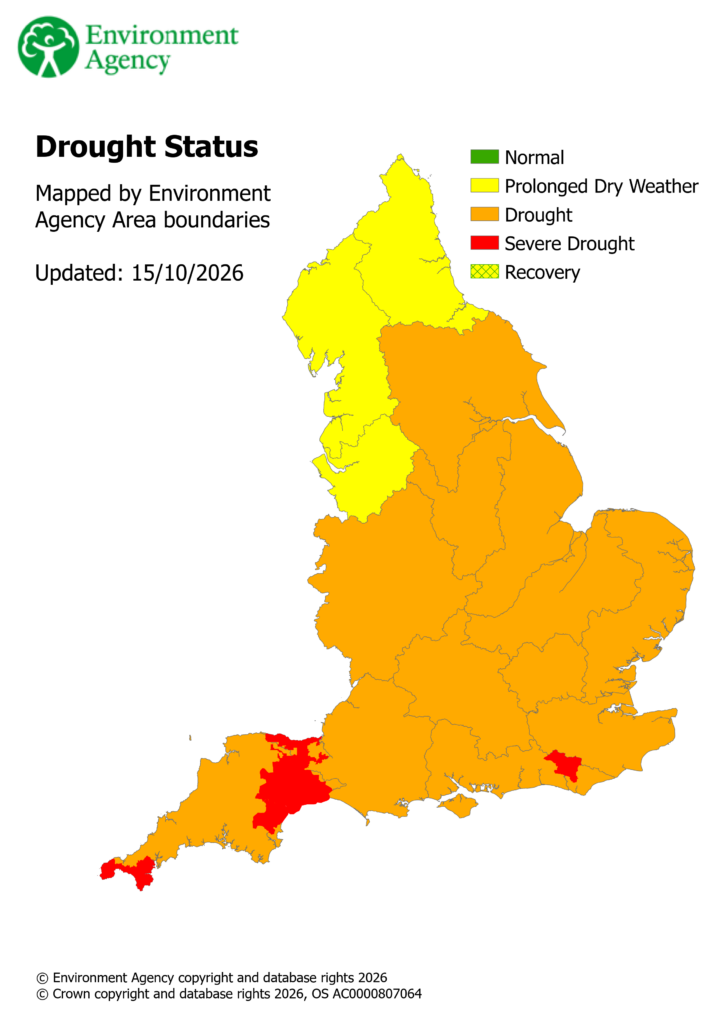
On 15 October the government declared severe drought in parts of Cornwall, Devon, Dorset, Somerset, East Sussex and West Sussex.
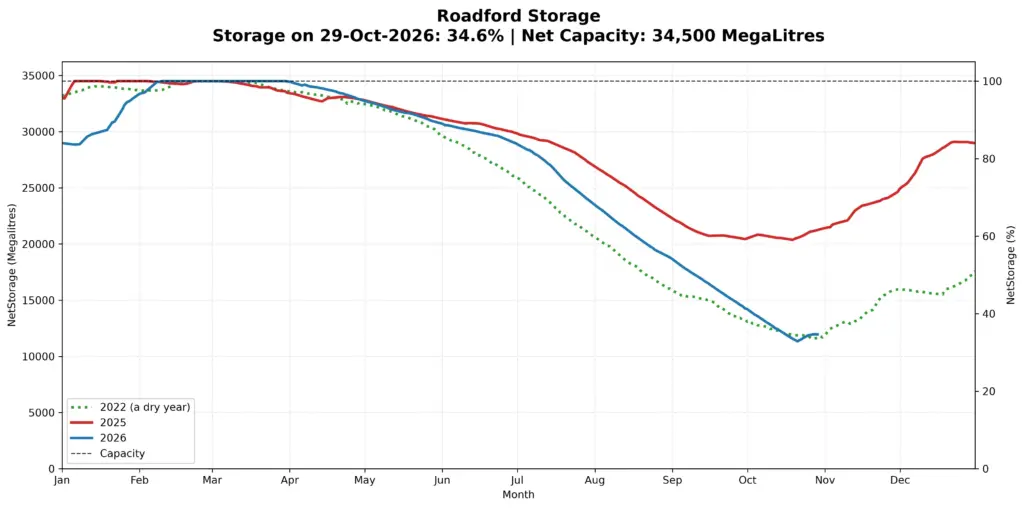
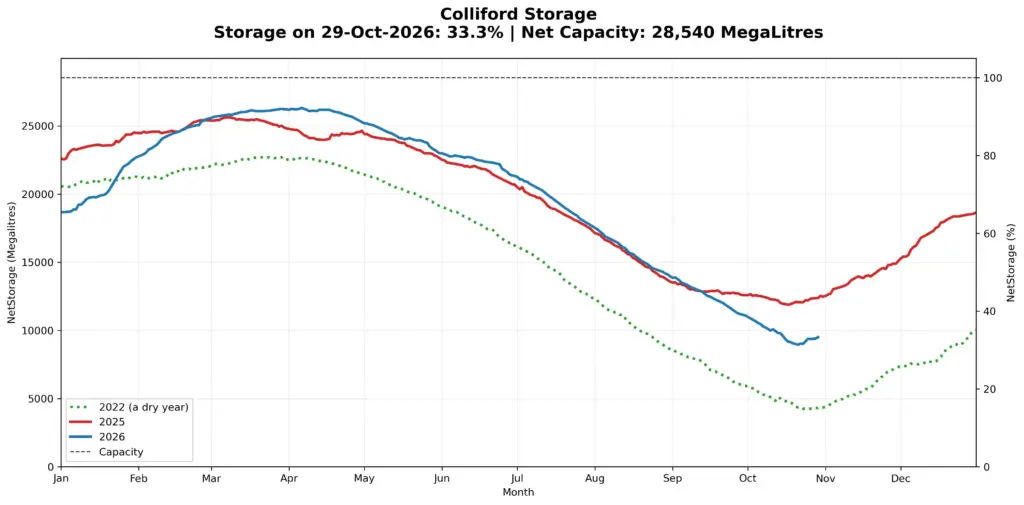
Here is a graph of the water levels in our nearby reservoir at Roadford Lake, plus the largest reservoir in Cornwall, Colliford Lake:
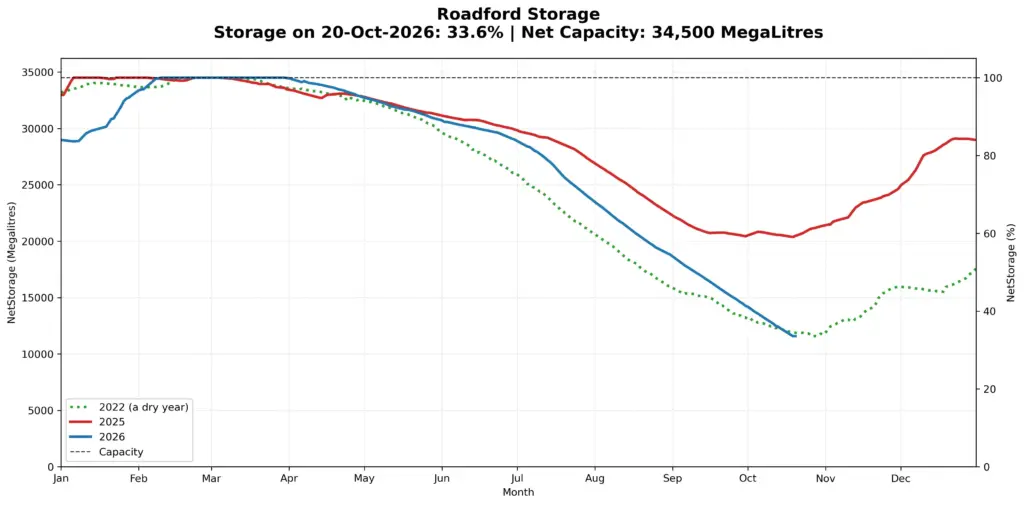
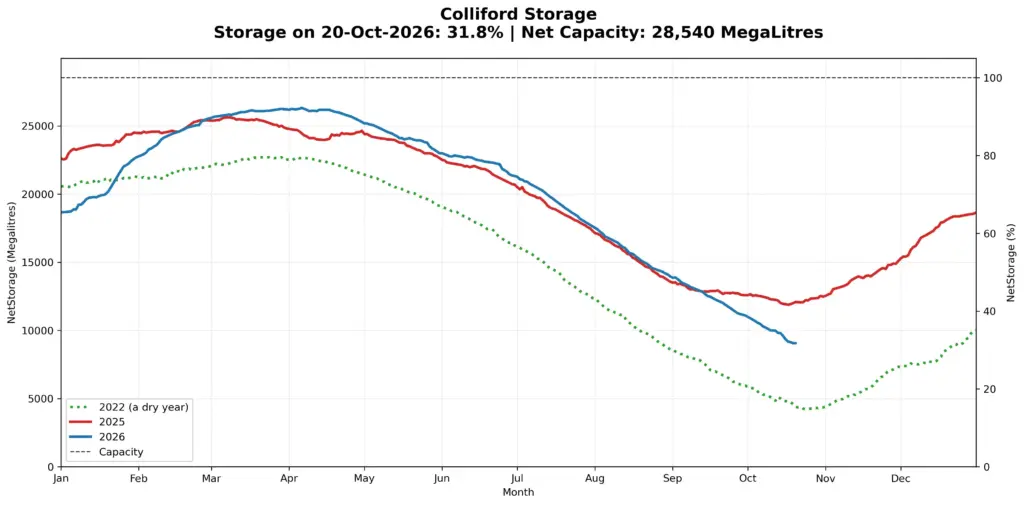
Whilst the water level in Colliford is still significantly above the same date in the previous drought year of 2022, that does not apply to Roadford. However the red area on the EA’s map doesn’t reach us here in West Devon just yet.
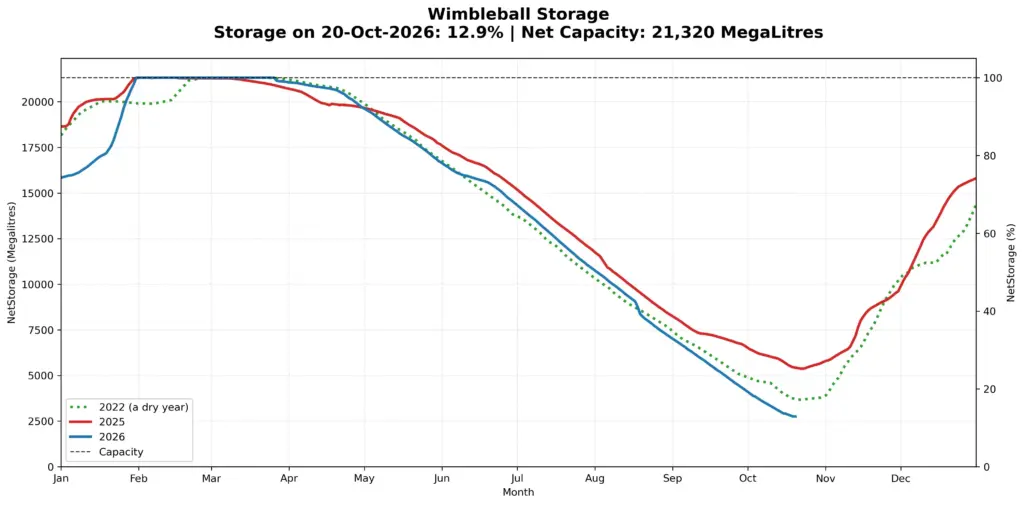
Here too are the graphs of South West Water’s reservoirs feeding the severe drought area, which are in an even worse state:
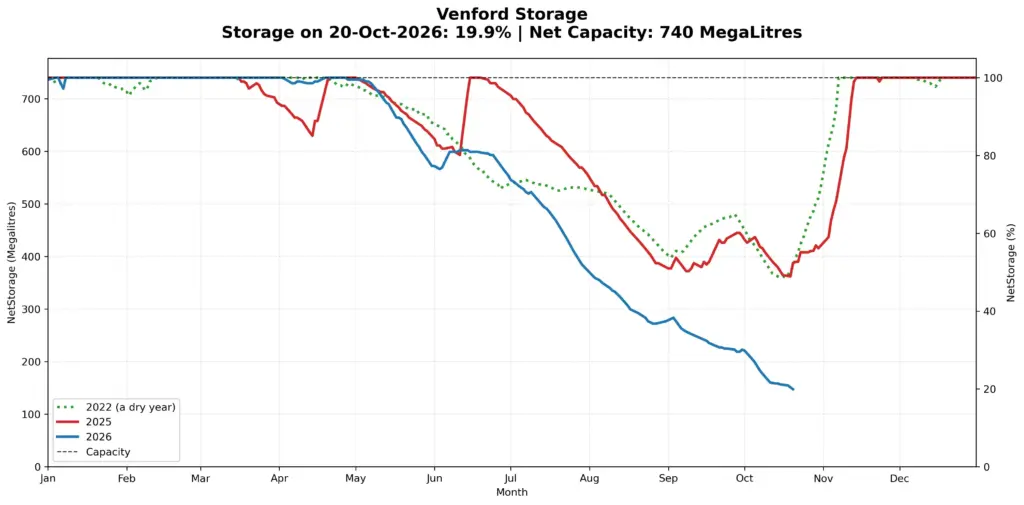
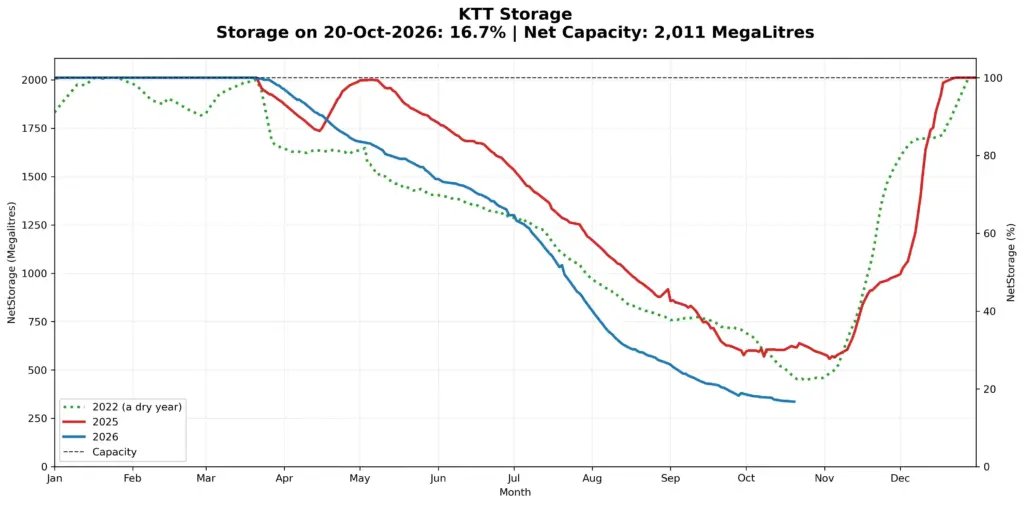
According to South West Water’s own article on the severe drought:
Reservoir levels are dropping because water resources are being used faster than they’re replaced by rainfall. We’re doing all we can to address the situation, including managing the network and fixing more leaks. However, we also need customers to use less water to help reservoir levels recover in this critical phase of the drought. Every Drop Counts – small changes make a big difference.
Following the hottest summer ever recorded, drought conditions continue across much of England. You might be wondering how we could be in drought at this time of year when there has been some rain.
The answer is that the rain we have had is not enough to counteract all the months we had with high temperatures and low rainfall. Much of the rainwater has been absorbed by dry soil, rather than adding to river flows.
We usually take water from rivers to top up reservoirs or supply treatment works directly, but river flows are still not strong enough. This means we have to rely on the water that’s stored in your local reservoir. And that water is now limited. You can find more information about our reservoir levels here.
The areas now in severe drought, in our supply area, are shown below.
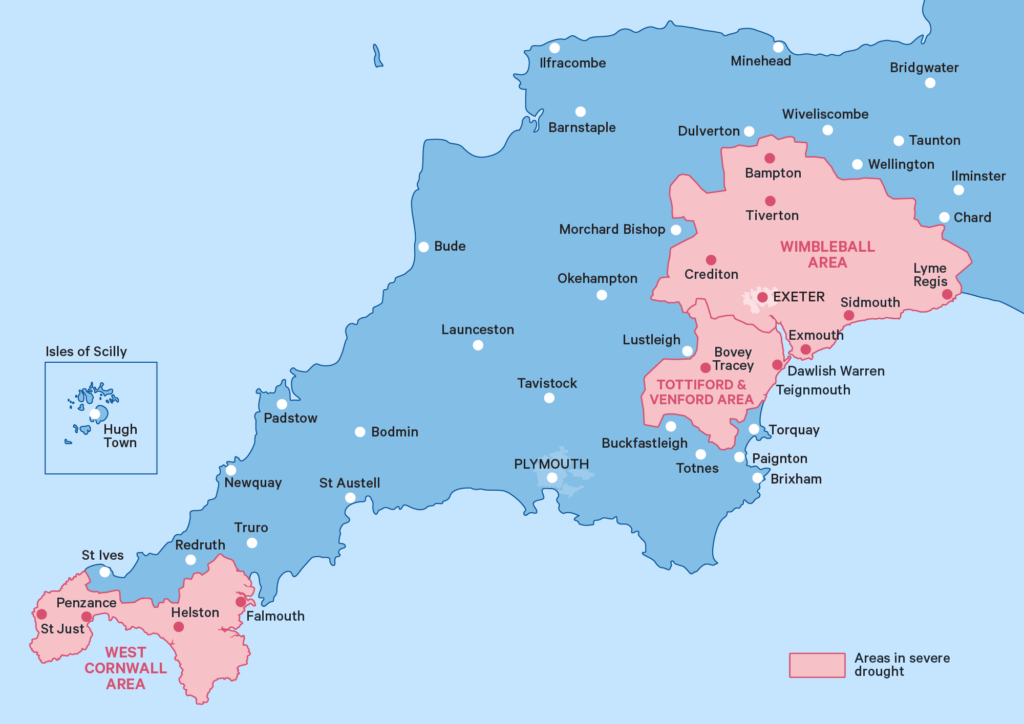
The latest Environment Agency drought report has just been published, and states that:
Two named storms, Austen and Boelo, made this the wettest reporting week across England since October 2024. The rainfall improved river flows and reservoir storage, but significant water resource pressures remain.
October rainfall to date is 111% of the long-term average for England, although soil remains drier than expected for the time of year. River flows increased at almost all reporting sites, with most now normal or higher. More than two-thirds of reservoirs or reservoir groups also increased in storage, taking total storage for England to 57.9% as of 27 October, although this remains 19% below average and ten reservoirs or groups are still exceptionally low. Groundwater levels continue to decline at most sites, as dry soils limit recharge.
Severe drought remains in parts of Cornwall, Devon, Dorset, Somerset, East Sussex and West Sussex. This reflects the continued pressure on water resources in areas reliant on Ardingly Reservoir, Wimbleball Reservoir and several smaller reservoirs in Devon and west Cornwall.
Let’s take a closer look at the current water levels of the reservoirs feeding the severe drought area of Devon:
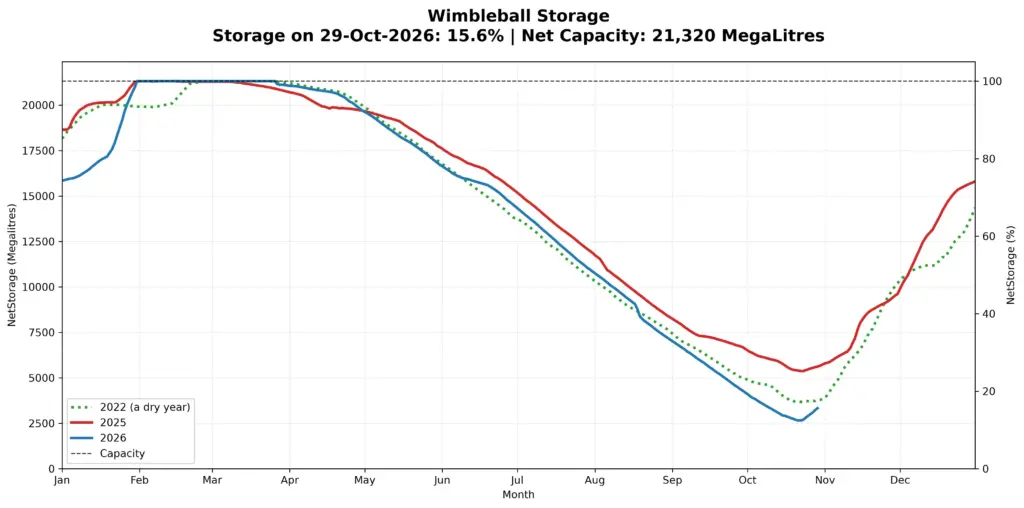
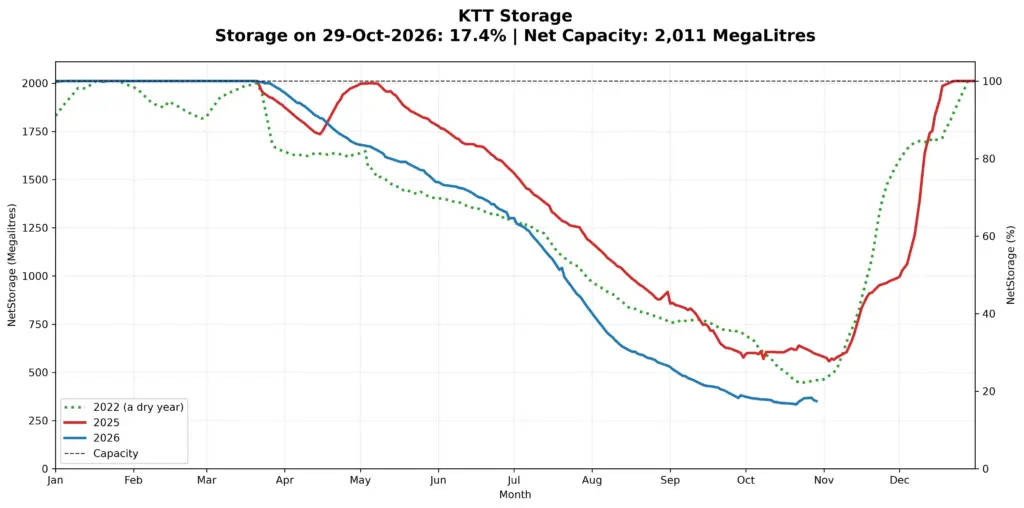
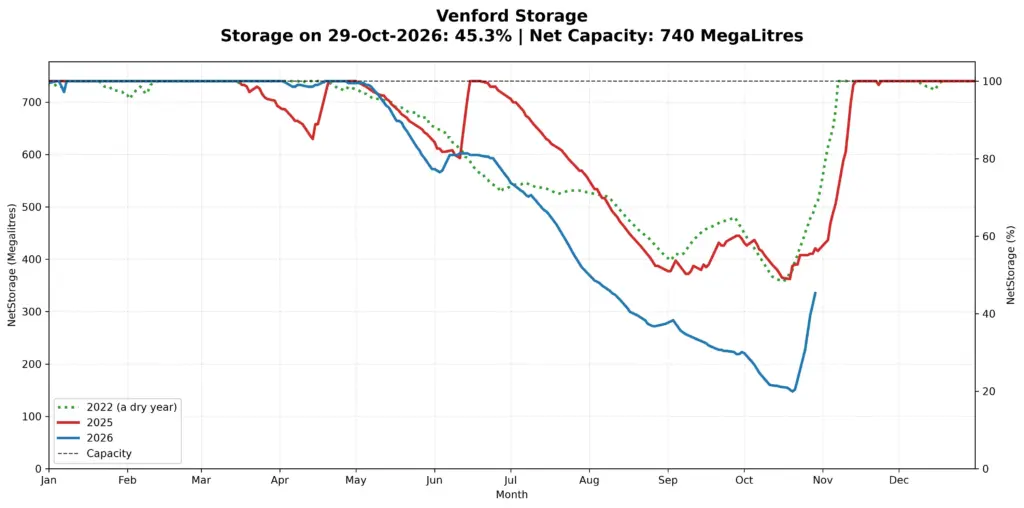
Whilst the situation in Wimbleball and Venford has been improved by the rain brought by Austen and Boelo to Exmoor and Dartmoor, the Tottiford group of reservoirs that feed Torbay are still hovering around the 2026 minimum of 17% of total net capacity.
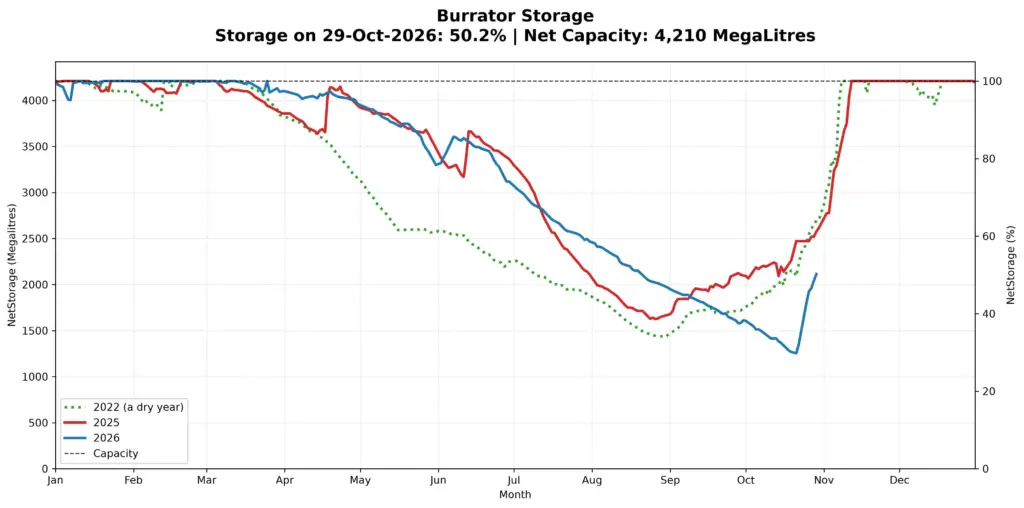
The less perilous water levels in Roadford and Colliford Lakes have also improved, as has the level in Burrator Reservoir that feeds Plymouth:
Needless to say, the current hosepipe ban remains in place for the foreseeable future.
