
This morning the Department for Environment, Food & Rural Affairs issued a press release announcing that:
Half of England has been declared in drought by the Environment Agency.
A large swathe of central, eastern, and southern England is now experiencing a flash drought – which develops very quickly brought about by a combination of very low rainfall and higher temperatures.
Rivers are running low, farmers are having to harvest crops early, wildfire risk is increasing, and millions of people are living under restrictions on water use.
The seven areas in drought are:
- East Anglia,
- Hertfordshire and the whole of London,
- Thames Valley,
- Hampshire & the Isle of Wight,
- Devon & Cornwall,
- The West Midlands,
- Wessex (covering Dorset, Somerset, Wiltshire, and south Gloucestershire)
The Environment Agency has again stepped up its operational response, including enhanced monitoring and controlling how much water can be taken from rivers and groundwaters.
According to Water Minister Emma Hardy:
Our climate is changing, droughts are becoming increasingly common, and we need to be prepared for this new normal.
We’re delivering long-term change in the water industry and driving record investments in infrastructure, including nine new reservoirs.
We expect water companies to follow their drought plans, to go further and faster to reduce leaks, and to ensure supplies are not disrupted even in the driest of weather.
Amongst numerous other bullet points in the press release, the following are of particular relevance to the West Country:
- July has so-far seen 7% of its long-term average rainfall. Some parts of Devon have not experienced a rain day for 50 days and parts of Hampshire have been without for 49 days.
- Reservoir storage has fallen further to 75.3% for England, around 7.4% below the long-term average for the time of year.
- Almost half are classed as below normal levels. Wimbleball (South West Water) and Blagdon (Bristol Water) reservoirs are exceptionally low.
- Soil moisture deficits last week were at record levels across the north-east, central, south-east and south-west England for this time in July.
- Waters surrounding the UK have also been experiencing marine heatwave conditions, with sea surface temperatures remaining well above average across many coastal areas.
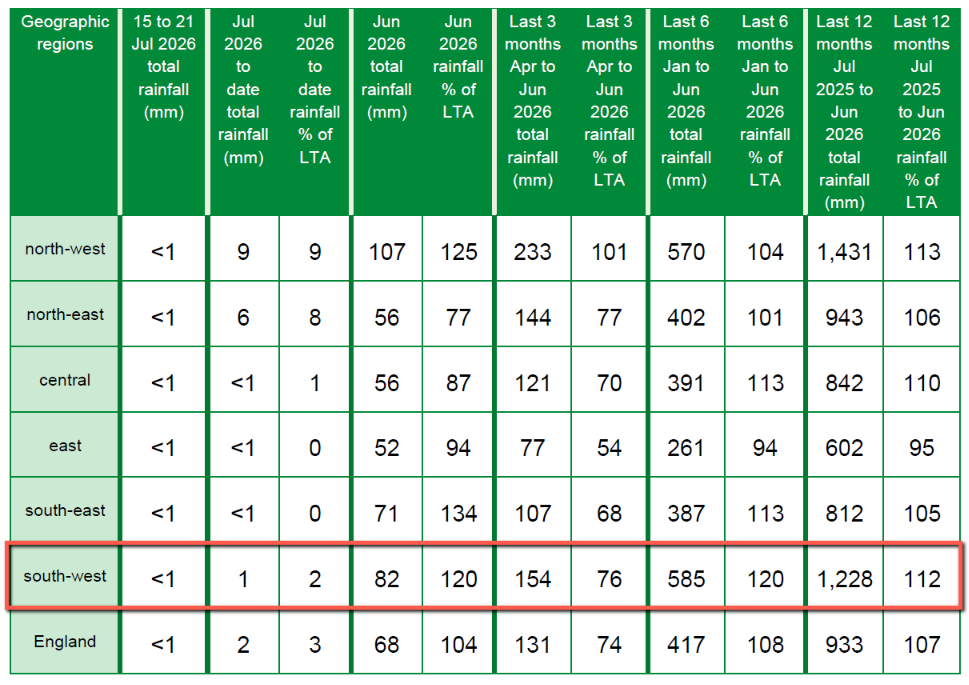
The most recent weekly rainfall and river flow report for England shows that over the first three weeks of July South West England received an average rainfall of a mere 1 mm, 2% of the long term average:
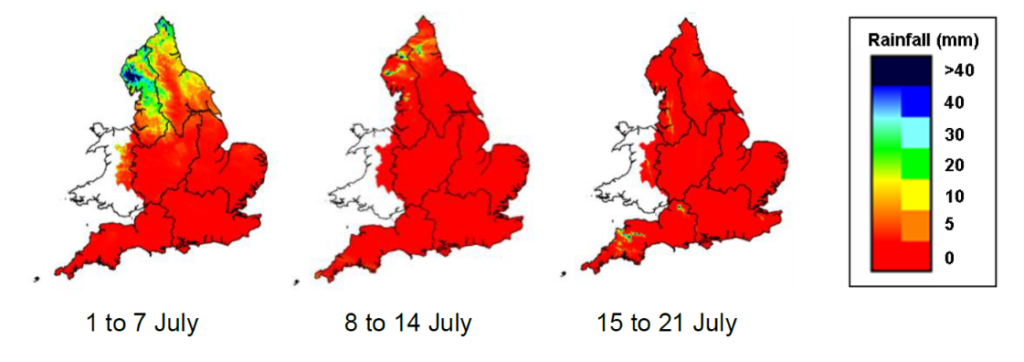
The accompanying map shows that a small area of Devon received more than that, thanks to the thunderstorms on July 16th:
South West Water have just released the latest data on the water levels in their largest reservoirs:
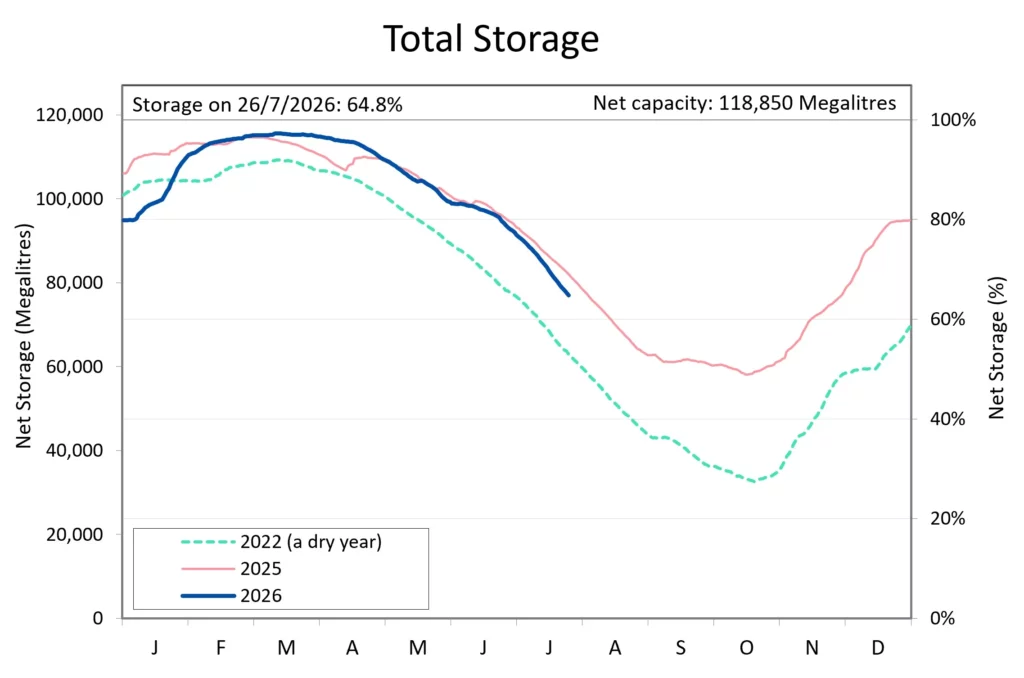
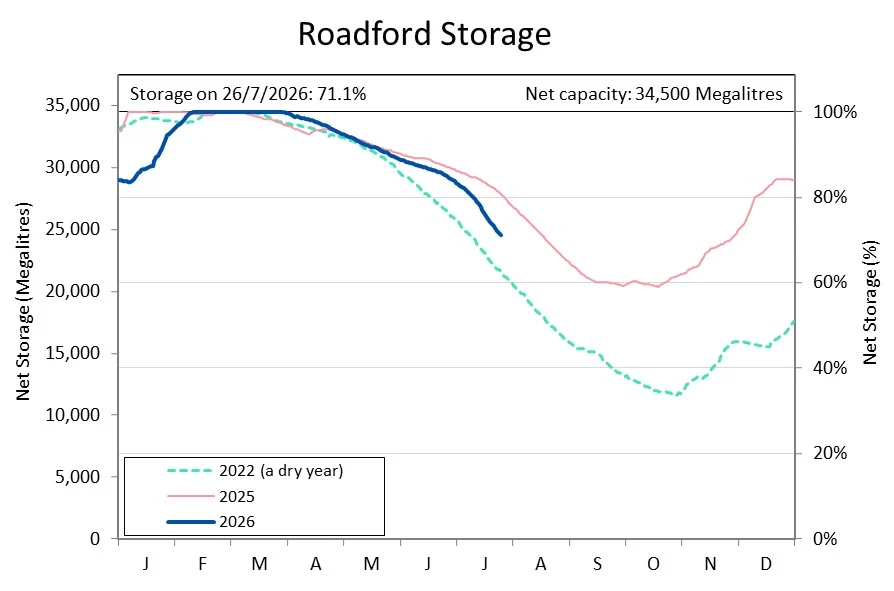
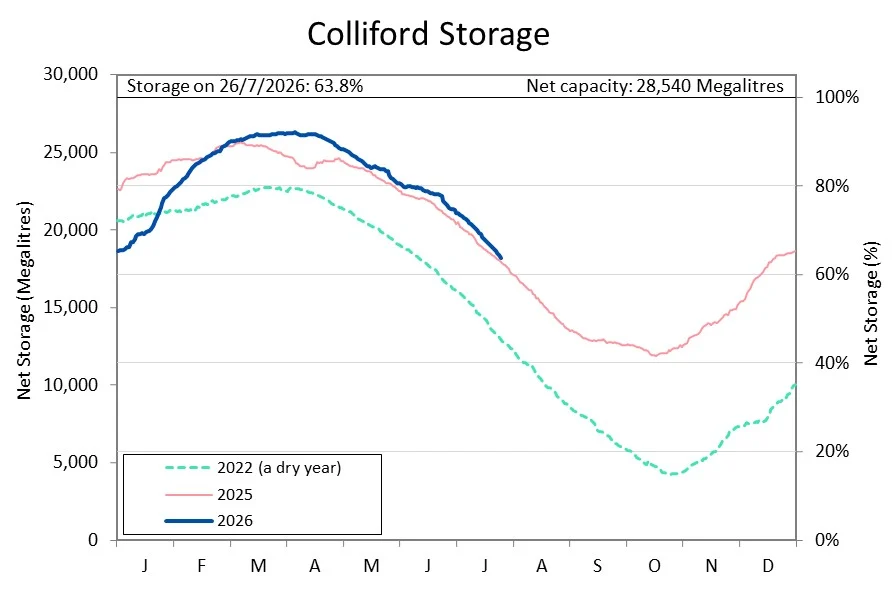
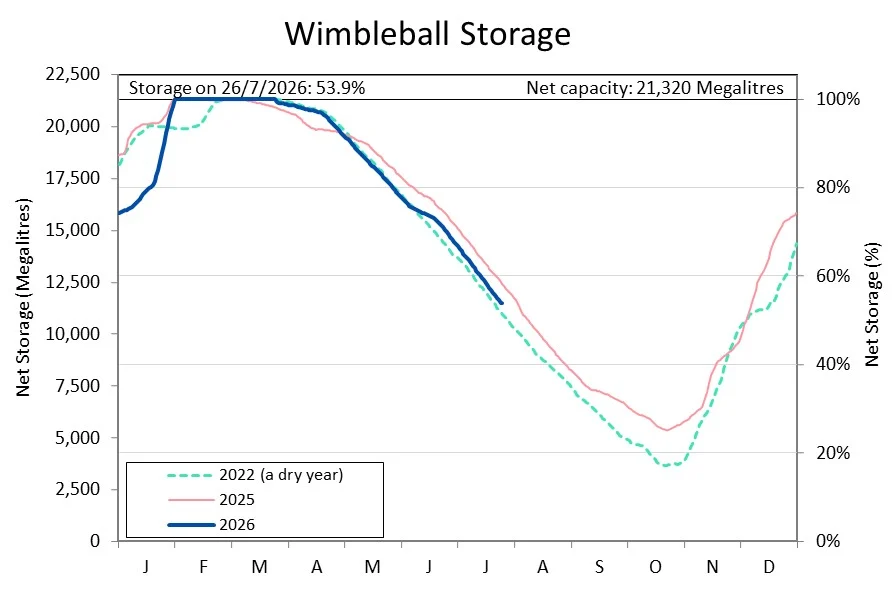
As mentioned in the DEFRA press release, with a water level only just over 50% Wimbleball Lake on Exmoor is currently causing the most concern. Hence the “hosepipe ban” for Mid Devon introduced by South West Water on July 14th.
The next rainfall report is due out tomorrow, and will confirm another week of remarkably little rain here in West Devon. The water level in Roadford Lake is currently well below last year’s on the same date. Is a temporary use ban looming just over the horizon for this part of the world?
[Update – August 8th]The answer to my previous question proved to be “yes”! On August 7th South West Water announced that:
It will introduce temporary restrictions on hosepipe use for all customers across Devon, Cornwall, parts of Dorset and Somerset and the Isles of Scilly as prolonged dry weather, significantly below average rainfall and continued high demand place increasing pressure on the region’s water resources.
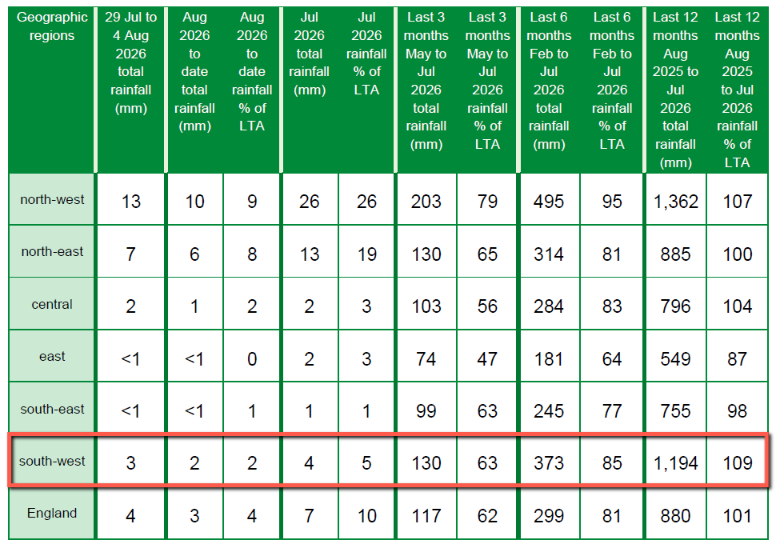
The Environment Agency reported that South West England received only 5% of it’s long term average rainfall for July:
To be continued…
